
dMAT Latin Squares: Rules, Sample Questions & Practice Papers
The dMAT Latin Squares subtest is the third and final section of the dMAT Core Module. It consists of 5×5 grids containing the letters A to E, where each letter must appear exactly once in every row and column. The task is to determine which letter belongs in the cell marked with a question mark.
This guide explains the dMAT Latin Squares rules, solving methods, practice questions, and preparation tips to help build speed and accuracy for the test.
Key Highlights:
- Each dMAT Latin Squares question uses a 5×5 grid with the letters A, B, C, D, and E, with each letter appearing once in every row and column.
- The section contains 20 Latin Squares tasks to solve in 25 minutes, giving approximately 75 seconds per question.
- Row-and-column elimination can help identify the missing letter directly or through a short chain of deductions.
Not Sure Where to
Start?
Speak with an
Expert and Get Clarity

Profile Evaluation & Eligibility
-
Target, Intakes & Deadlines
-
Scholarship and Loan Advice
dMAT Latin Squares Section: Overview
The dMAT Latin Squares section measures how efficiently applicants can use row-and-column constraints to identify the missing letter in a grid. Each task follows the Latin Square rule: every letter appears exactly once in each row and column. The goal is to determine the letter in the question-mark cell using the fewest possible deductions.
The table below summarises the dMAT Latin Squares section format and key requirements.
|
Parameter |
Detail |
|---|---|
|
Grid size |
5×5, with five rows and five columns |
|
Letters used |
A, B, C, D and E only |
|
Number of tasks |
20 |
|
Section duration |
25 minutes |
|
Average time per task |
75 seconds |
|
Scratch notes or rough paper |
Not allowed |
dMAT Latin Squares Elimination Method
The elimination method helps solve dMAT Latin Squares questions by using the letters already present in the target row and column. Since each letter can appear only once in a row and once in a column, you can eliminate impossible options until only one answer remains.
- Check the target row and column: Look at the row and column containing the question-mark cell. List the letters that already appear in both.
- Eliminate known letters: Remove every letter that already appears in the target row or column from the answer choices.
- Find the missing letter: If four of the five letters are already present across the target row and column, the remaining letter is the answer.
- Use a supporting cell if needed: When two or more letters remain possible, check another cell in the same row or column. Use its constraints to eliminate an additional option and determine the answer.
Tip: Stop solving the grid once the marked cell is determined. Filling additional cells in the grid wastes valuable time during the dMAT Latin Squares section.
dMAT Latin Squares Sample paper PDF Download
Our dMAT Latin Squares sample paper is designed to mirror the logic and format of the actual test along with an answer key. Download the PDF to familiarise yourself with the question style and build speed through timed practice.
[Download the dMAT Latin Squares Sample Paper]
dMAT Latin Squares Practice Questions With Answers
The dMAT Latin Squares test only uses a 5x5 grid. So practising grids that follow the same pattern as the official exam can help you improve your speed before test day. The sample questions below progress from a direct one-step read to a two-step chain, reflecting the low, medium, and great difficulty questions seen in the dMAT exam pattern.
Sample Question 1:
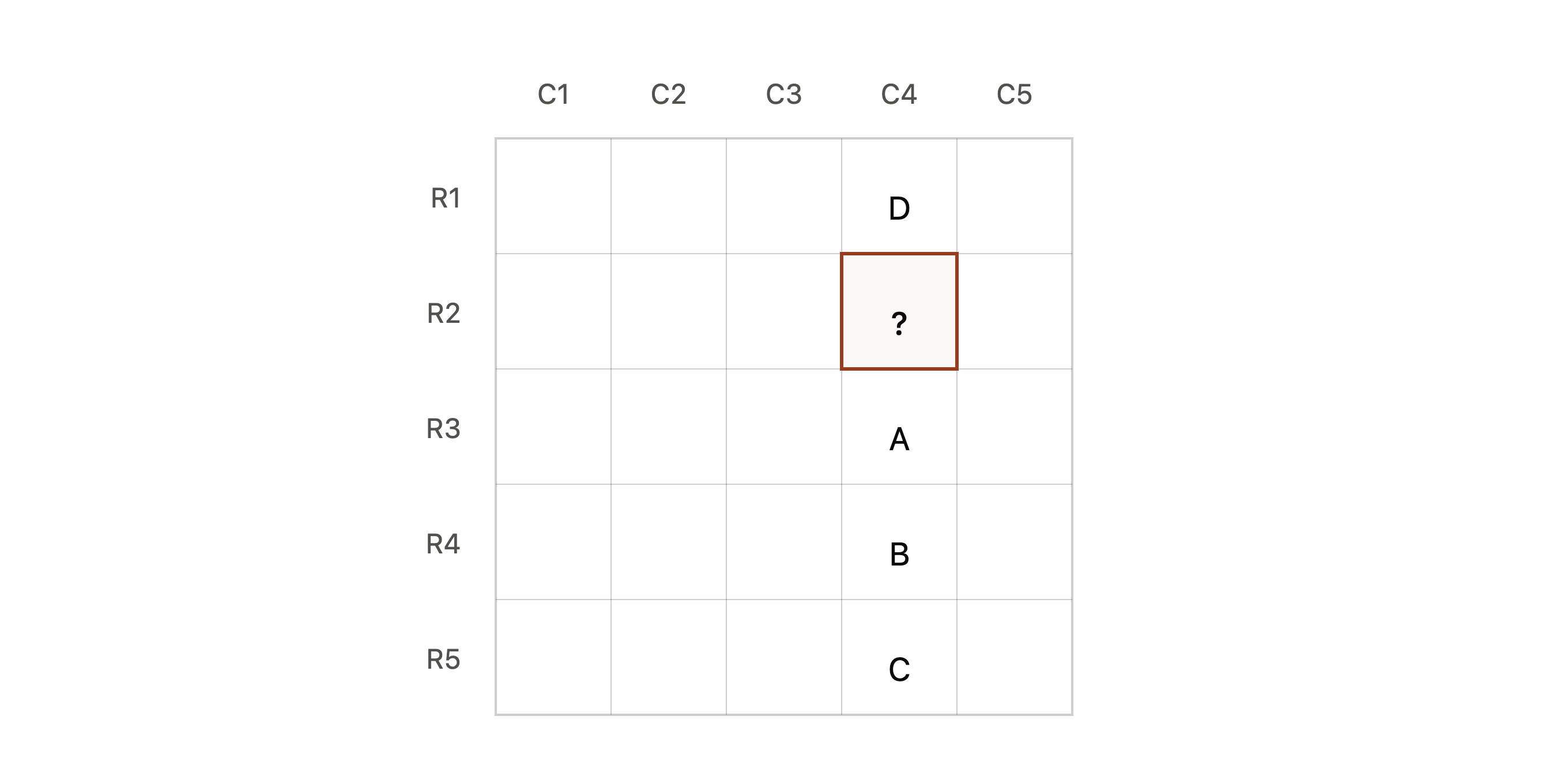
Answer: E. Column 4 already shows D, A, B, and C. The only letter missing from the full set of five is E, so E belongs in the marked cell.
Sample Question 2
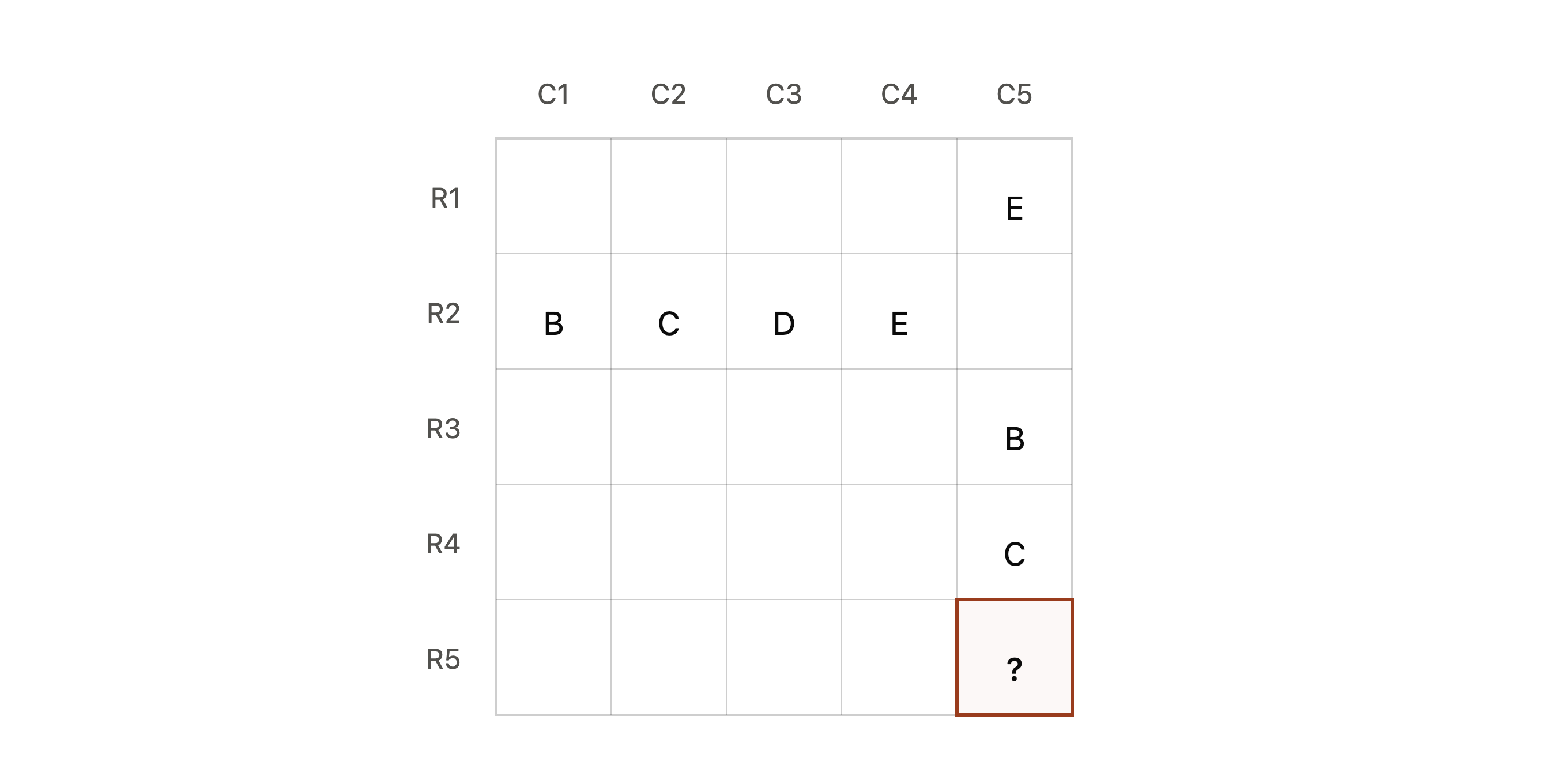
Answer: D. Row 2 already shows B, C, D, and E, so the missing letter in that row, A, belongs in the last cell of row 2. With that cell filled, column 5 now reads E, A, B, C, and the question mark, and D is the only letter missing from the column.
Sample Question 3
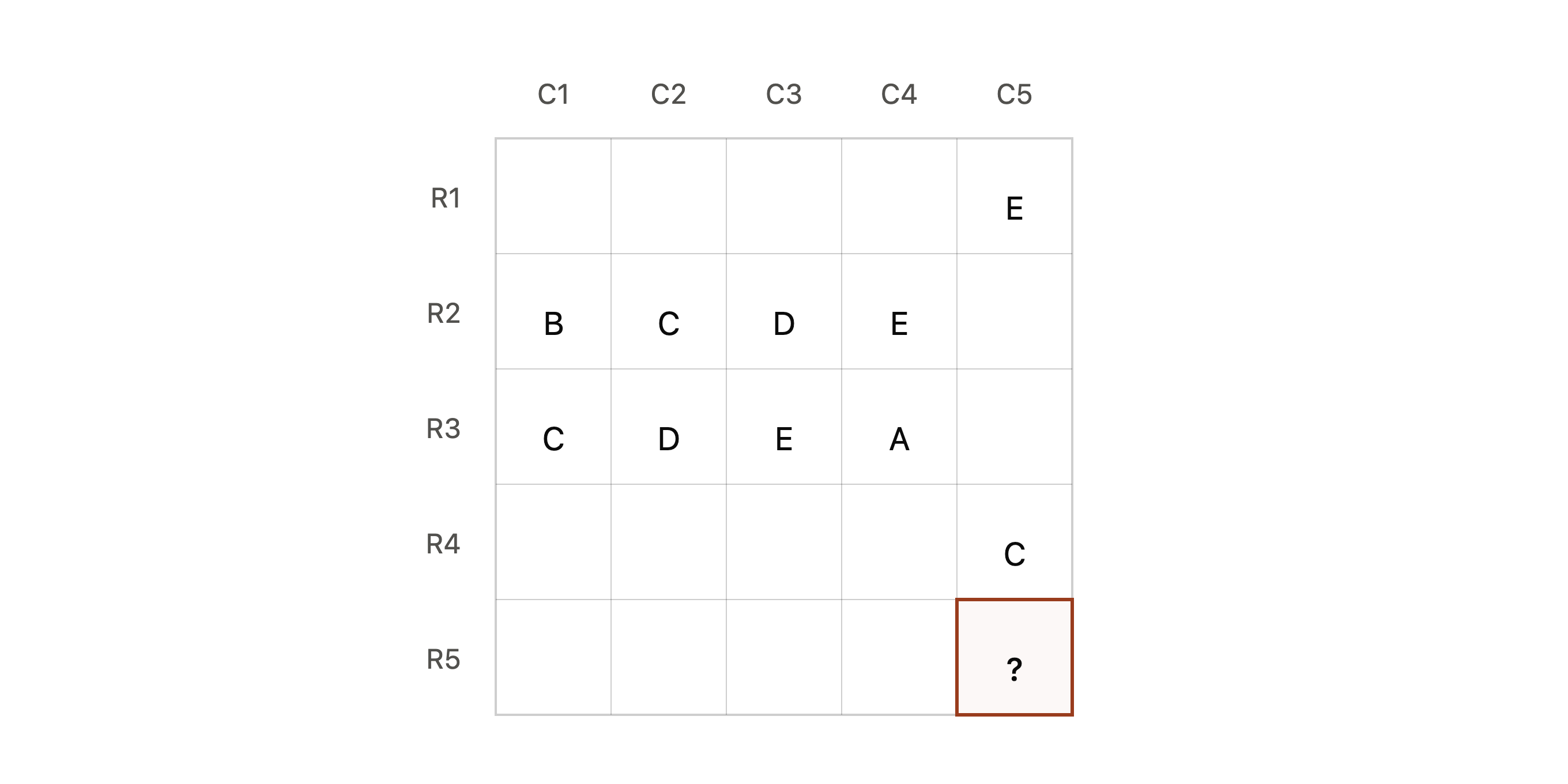
Answer: D. Row 2 shows B, C, D and E, so A completes row 2 at column 5. Row 3 shows C, D, E and A, so B completes row 3 at column 5. Column 5 now reads E, A, B, C and the question mark, leaving D as the only letter unaccounted for.
dMAT Latin Squares Study Plan
A four-week plan can take your dMAT Latin Squares practice from accuracy to speed when each week focuses on a specific skill. Start by building accuracy without a timer, then gradually introduce time limits so you develop speed without sacrificing your elimination method.
|
Week |
Focus |
Target |
|---|---|---|
|
Week 1 |
Learn the rules and practise one-step row or column reads only |
90% accuracy, no time pressure yet |
|
Week 2 |
Add two-step grids that need one supporting cell resolved first |
Under 75 seconds per grid, accuracy above 85% |
|
Week 3 |
Mix one-step, two-step and three-step chained grids in random order |
20 mixed grids inside 25 minutes, at least 80% correct |
|
Week 4 |
Complete full 20-task sets back to back with Figure Sequences and Mathematical Equations to rehearse the entire 75-minute Core Module |
All three subtests finished inside their combined time, without notes |
Tips to Solve dMAT Latin Squares Question in 75 Seconds
To solve dMAT Latin Squares questions within the time-limit, you need to scan the grid for missing letters since there is no calculation involved at all.
- Scan the cross before anything else: Look at the target row and column first, and ignore the rest of the grid until the cross alone fails to give you an answer.
- Name the missing letters in your head: A short mental phrase such as "row needs B and E, column needs A and E" holds the answer possibilities set without needing notes, and stops you from re-scanning the same line twice.
- Resolve the fuller line first: When a supporting cell is needed, solve it from whichever row or column already shows the most letters, since that line narrows to an answer fastest.
- Move on if a grid stalls: If neither the cross nor one supporting cell gives you the answer inside a few seconds, guess and move to the next task rather than searching for a longer chain.
From the Desk of Yocket
dMAT Latin Squares task rewards preparation that matches the exact format of the dMAT rather than general logic practice, and the elimination habits above transfer directly to the pressure of the real 25-minute window.
Yocket Prep provides dMAT guides and sample papers to help you understand the question types and practise your approach. Work through the examples, sharpen your solving strategy, and build confidence for test day.
FAQs on dMAT Latin Squares
How many questions are present in dMAT Latin Squares questions?

Are diagonals part of the dMAT Latin Squares rule?
Can you take notes during dMAT Latin Squares?
Is dMAT Latin Squares similar to a Sudoku puzzle?

Need the Ultimate Study Plan?
Consult with a Master Trainer for a custom roadmap to score high!

 1800-270-6088
'%3e%3cpath%20d='M11.6654%209.60799C11.5056%209.52809%2010.4669%209.04869%2010.3071%208.96879C10.1473%208.88889%209.98752%208.88889%209.82772%209.04869C9.66792%209.20849%209.34832%209.68789%209.18851%209.84769C9.10861%2010.0075%208.94881%2010.0075%208.78901%209.92759C8.22971%209.68789%207.67041%209.36829%207.19101%208.96879C6.79151%208.56929%206.39201%208.08989%206.07241%207.61049C5.99251%207.45069%206.07241%207.29089%206.15231%207.21099C6.23221%207.13109%206.31211%206.97129%206.47191%206.89139C6.55181%206.81149%206.63171%206.65169%206.63171%206.57178C6.71161%206.49188%206.71161%206.33209%206.63171%206.25219C6.55181%206.17229%206.15231%205.21348%205.99251%204.81398C5.91261%204.25468%205.75281%204.25468%205.59301%204.25468H5.19351C5.03371%204.25468%204.79401%204.41448%204.71411%204.49438C4.23471%204.97378%203.99501%205.53308%203.99501%206.17228C4.07491%206.89139%204.31461%207.61049%204.79401%208.24969C5.67291%209.52809%206.79151%2010.5668%208.14981%2011.206C8.54931%2011.3658%208.86891%2011.5256%209.26842%2011.6055C9.66792%2011.7653%2010.0674%2011.7653%2010.5468%2011.6854C11.1061%2011.6055%2011.5855%2011.206%2011.9051%2010.7266C12.0649%2010.407%2012.0649%2010.0874%2011.985%209.76779L11.6654%209.60799ZM13.6629%202.33708C10.5468%20-0.779026%205.51311%20-0.779026%202.397%202.33708C-0.1598%204.89388%20-0.639201%208.80899%201.1186%2011.9251L0%2016L4.23471%2014.8814C5.43321%2015.5206%206.71161%2015.8402%207.99001%2015.8402C12.3845%2015.8402%2015.9001%2012.3246%2015.9001%207.93009C15.98%205.85268%2015.1011%203.85518%2013.6629%202.33708ZM11.5056%2013.5231C10.4669%2014.1623%209.26841%2014.5618%207.99001%2014.5618C6.79151%2014.5618%205.67291%2014.2422%204.63421%2013.6829L4.39451%2013.5231L1.9176%2014.1623L2.5568%2011.7653L2.397%2011.5256C0.479401%208.32959%201.4382%204.33458%204.55431%202.33708C7.67041%200.339576%2011.6654%201.37828%2013.583%204.41448C15.5006%207.53059%2014.6217%2011.6055%2011.5056%2013.5231Z'%20fill='%232B3340'/%3e%3c/g%3e%3cdefs%3e%3cclipPath%20id='clip0_202_11837'%3e%3crect%20width='16'%20height='16'%20fill='white'/%3e%3c/clipPath%3e%3c/defs%3e%3c/svg%3e) +91 6366421078
+91 6366421078 support@yocket.in
 1st floor, Chandermukhi Building, Nariman Point, Mumbai, Maharashtra 400021
© 2026 Yocket Prep. All rights reserved.
GRE® is a registered trademark of Educational Testing Service (ETS). This website is not endorsed or approved by ETS.


